When does design enter the room? The answer tells you everything about how a company values the function.
At one end, design is a partner — embedded from day one, shaping the problem alongside product and engineering. At the other, it's lipstick — called in at the end to make something look presentable before it ships.
The gap between these two models is the gap in quality at launch.
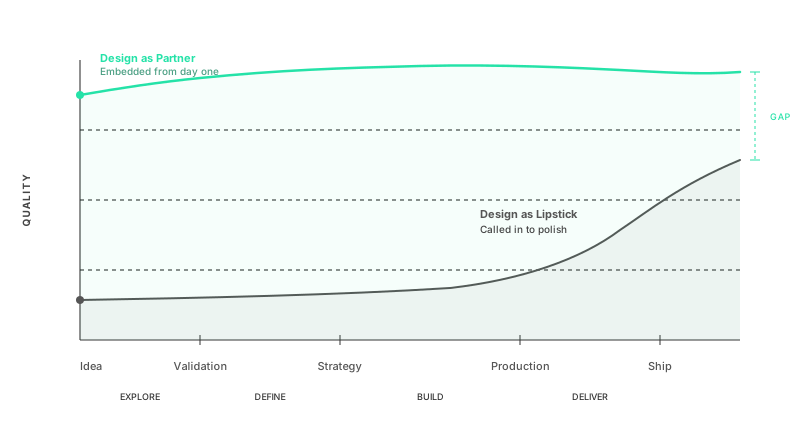
When design shows up early, it influences the problem statement, the user model, and the architecture of the solution. Constraints get surfaced sooner. Bad ideas die cheaper. The work compounds because every decision downstream inherits the clarity of the ones before it.
When design shows up late, it inherits decisions it had no hand in making. The best it can do is optimize surfaces. The structure is already set. You're decorating a house someone else framed.
I've lived both models. Every time the partnership started earlier, the outcome was better — not because designers are smarter, but because the process had more signal and fewer assumptions baked in by the time anything got built.
If you want design to be a differentiator, involve it before you know what you're building. Not after.